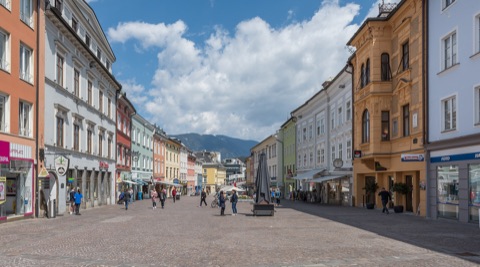
A day in town or at a castle: Völkermarkt, Bleiburg, Klagenfurt, the Wörthersee, Hochosterwitz and as far as Graz – much of it without a car, free by train with the Aktiv Card.
Aktiv Card Südkärnten – your free guest card, which you get from us from the very first night. More about the Aktiv Card
Kärnten Card – the paid sightseeing card of the province of Carinthia, with free entry to more than 120 attractions; not included in the Aktiv Card. kaerntencard.at↗
Without a car: Aktiv Card, train & bus 7
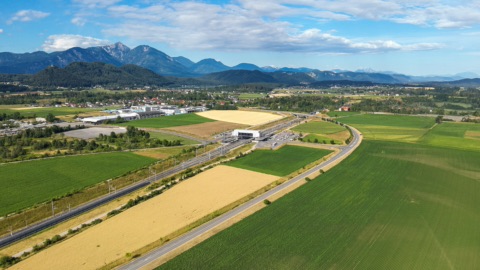
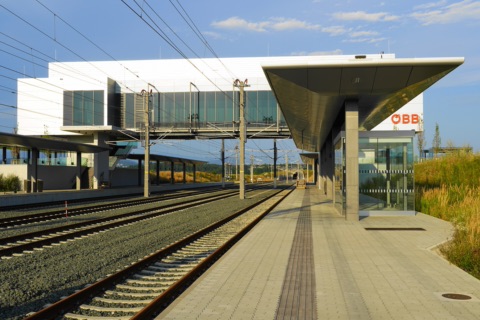
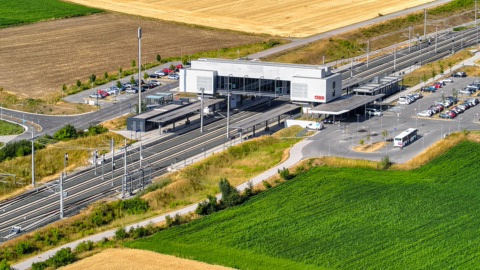
Kühnsdorf-Klopeiner See station – getting around without a car9.2 km · 30 min by bike · 10 min by carSince December 2025, Koralmbahn trains have stopped at the new Kühnsdorf-Klopeiner See station: you can reach Graz in about 35 minutes and Vienna in about three hours, and since March 2026 WESTBAHN trains run here too.Free with Aktiv Card
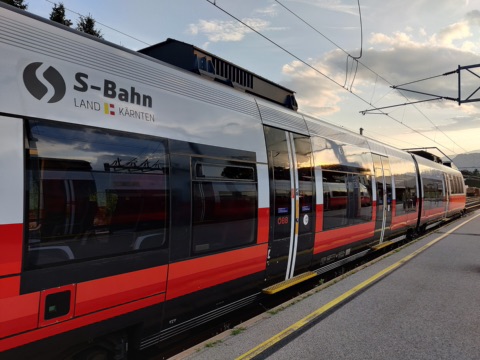
Since December 2025, Koralmbahn trains have stopped at the new Kühnsdorf-Klopeiner See station: you can reach Graz in about 35 minutes and Vienna in about three hours, and since March 2026 WESTBAHN trains run here too. With the Aktiv Card you use the S-Bahn throughout Carinthia free of charge – for trips to Klagenfurt or Villach, for example. From the station, the See-Shuttle (lines 763/764), the Postbus Shuttle or the ÖBB station shuttle take you to the Turnersee and the Klopeiner See.
All year
At a glance
Koralmbahn since 12 December 2025: Graz approx. 35 min, Vienna approx. 3 h
WESTBAHN since March 2026
Aktiv Card: S-Bahn in Carinthia free, bikes not included
See-Shuttle 763/764 daily from May to September, timed to connect with the trains
Our tip
Book the ÖBB station shuttle together with your train ticket in the ÖBB Scotty app.
The region’s info line answers timetable questions on +43 4239 2222.
Carinthia station shuttle (ÖBB Transfer)9.2 km · 30 min by bike · 10 min by carIf you arrive by train, the station shuttle takes you from Kühnsdorf-Klopeiner See station (on the Koralmbahn) or from Bleiburg right to your door.
If you arrive by train, the station shuttle takes you from Kühnsdorf-Klopeiner See station (on the Koralmbahn) or from Bleiburg right to your door. You book it in the ÖBB ticket shop or the ÖBB app together with your train ticket. Without a train ticket you can book by phone; you’ll need your travel date, the number of people and the number of pieces of luggage. To be sure of your ride, book by 20:00 the day before at the latest.
Free train travel with the guest card9.2 km · 30 min by bike · 10 min by carAs registered overnight guests, you travel free on public transport in Carinthia with your guest card (Aktiv Card Südkärnten).Free with Aktiv Card
As registered overnight guests, you travel free on public transport in Carinthia with your guest card (Aktiv Card Südkärnten). The nearest station is Kühnsdorf-Klopeiner See. From there you can get to Klagenfurt, Villach or the Wörthersee without a car. From 1 November 2026 the extended scheme applies: regional and long-distance trains of ÖBB and Westbahn within Carinthia, regional and city buses, and the Postbus Shuttle. Bikes and dogs are not included.
All year, during your stay
At a glance
Valid from your arrival day to your departure day, no activation needed
Show your guest card and photo ID when boarding
Only within Carinthia; bike, dog and seat reservation cost extra
Children under 6 travel without their own card
Our tip
Ask us about the digital pre-check-in – then you’ll already have the card on your phone when you arrive.
For journeys across the provincial border, to Graz for instance, buy your ticket only from the last station in Carinthia.
See-Shuttle (lake shuttle, buses 763 and 764)9.2 km · 30 min by bike · 10 min by carThe Kärntner Linien See-Shuttle takes you from Kühnsdorf-Klopeiner See station to the Klopeiner See and the Turnersee.
The Kärntner Linien See-Shuttle takes you from Kühnsdorf-Klopeiner See station to the Klopeiner See and the Turnersee. It stops at the lidos and promenades and ends in the centre of St. Primus, very close to our house. The buses are timed to the trains from Graz: in the morning they run to the lakes, in the early evening back to the station. In 2026 they ran daily from 1 May to 30 September.
May–September, daily
At a glance
From the station at 9:23, Sat/Sun/public holidays also 10:41; from St. Primus centre to the station at 18:10 (as of 2026)
Kärntner Linien fares; Kärnten Ticket and Klimaticket valid
Stops include Südpromenade, Grabelsdorf, Campingplatz Turnersee, St. Primus
Our tip
For a day trip by train: take the 18:10 bus from St. Primus to the station in the evening; the train to Graz leaves at 18:42.
Check the current timetable on kaerntner-linien.at before you travel, as the 2027 times have not been published yet.
Aktiv Card Klopeiner See – Südkärnten – Lavanttaldigital / throughout the regionAs a guest of a participating property, you get the Aktiv Card – a free guest card – for the length of your stay, digitally on your smartphone.Free with Aktiv Card
As a guest of a participating property, you get the Aktiv Card – a free guest card – for the length of your stay, digitally on your smartphone. It includes more than 30 guided programmes, such as cycling and hiking tours, discovery walks and taster courses, plus free travel on S-Bahn and REX trains throughout Carinthia. Many partners offer discounts, for example 20% on the Petzen cable car, at the Griffener Tropfsteinhöhle or at the Flying-Fox-Park. Just ask us about it when you arrive.
May–October
At a glance
Valid for guests from May to October, free
More than 30 included programmes per season
S-Bahn and REX free within Carinthia; taking bikes on the train not included; photo ID required
Postbus shuttle Southern Carinthia: €2 per journey (St. Kanzian, Eberndorf, Bleiburg, Feistritz), as of 2026
Our tip
Sign up for the programmes by the day before at the latest, in the “Mein Südkärnten” app or at card.klopeinersee.at, as places are limited.
On the train, the card on your phone together with an ID is all you need.
Aktiv Card: discounts at partner businessesall over the regionYou get the Aktiv Card Südkärnten, a free guest card, from participating accommodation around the Klopeiner See and the Turnersee; it goes straight onto your smartphone.Discount with Aktiv Card
You get the Aktiv Card Südkärnten, a free guest card, from participating accommodation around the Klopeiner See and the Turnersee; it goes straight onto your smartphone. Besides the free programme, it brings discounts at partner businesses – for example 20 per cent on the Petzen cable car, the Griffener Tropfsteinhöhle, the Flying Fox Park at the Wildensteiner Wasserfall and the Klippitztörl summer toboggan run, and 50 per cent at the Pilgermuseum Globasnitz. Simply show the card at the ticket office.
May–October
At a glance
Petzen cable car return trip −20% for adults (as of 2026)
Griffener Tropfsteinhöhle, Flying Fox Park, Klippitztörl summer toboggan run −20% each (as of 2026)
Pilgermuseum Globasnitz −50% for adults (as of 2026)
Gymstar Fitness St. Kanzian −20% on day and 2-week tickets (as of 2026)
Our tip
Individual partners’ conditions may change – have a look at the current list on suedkaernten.at before your visit.
Southern Carinthia region guide (web app)digital / throughout the regionThe Regionsguide is the free digital travel companion of the Klopeiner See – Südkärnten region.Free with Aktiv Card
The Regionsguide is the free digital travel companion of the Klopeiner See – Südkärnten region. The web app runs directly in the browser on your smartphone, tablet or PC; you don’t need to install anything, but you can add it to your home screen. In it you will find your Aktiv Card in mobile form, the events calendar, restaurants that are open, hiking and cycling routes, weather, webcams and information on buses and getting around. The content is also available offline.
All year
At a glance
Free, no installation needed (web app)
Mobile Aktiv Card built in
Favourites list and personal holiday planner
Content usable offline
Our tip
Add the app to your home screen as soon as you arrive – then you have your Aktiv Card with you even without a signal.
Cultural history walk on the Gracarca4 km · 11 min by bike · 6 min by carThe hills between the Klopeiner See and Grabelsdorf have been settled for more than 3,000 years.Free with Aktiv Card
The hills between the Klopeiner See and Grabelsdorf have been settled for more than 3,000 years. With tour guide Josef you walk the archaeological and historical heritage trail on the Gracarca: information boards with reconstructions show how people lived here in the Hallstatt period and later, and along the way views open up over the Klopeiner See. The easy two-hour walk is suitable for families with children aged 4 and over; bring trainers or trekking shoes and something to drink.
July–August, Wednesdays 9:00–11:00
At a glance
Meeting point: Golfpark Klopeinersee-Südkärnten, Am Golfpark 7, Grabelsdorf
Free with the Aktiv Card, register by 16:00 the day before
Children aged 4 and over, not suitable for pushchairs
Our tip
Register with your accommodation or the tourist information by 16:00 on Tuesday at the latest.
Vintage bus trip to Völkermarkt4.2 km · 12 min by bike · 6 min by carIn July and August a vintage bus runs from the Klopeiner See to Völkermarkt every Wednesday morning.Free with Aktiv Card
In July and August a vintage bus runs from the Klopeiner See to Völkermarkt every Wednesday morning. First it does a full circuit of the lake. In Völkermarkt an Austria Guide then takes you through the old town, to the parish church of St. Magdalena and into the Bürgerlustpark with its view of the reservoir and the Karawanks. Afterwards there is time for the market. The programme goes ahead in any weather and takes about four hours.
July–August, Wednesdays 8:30–12:30
At a glance
Meeting point: tourist information St. Kanzian, Schulstraße 10
Free with the Aktiv Card
Book by 16:00 the day before
Our tip
Wear comfortable shoes – the town tour is on foot.
If you are staying near Camping Nord, you can board there by arrangement.
Gracarca – Celtic hilltop settlement and heritage trail5.3 km · 15 min by bike · 8 min by carThe wooded hill of Gracarca (687 m) rises directly above the east shore of the Klopeiner See near Grabelsdorf.Free with Aktiv Card
The wooded hill of Gracarca (687 m) rises directly above the east shore of the Klopeiner See near Grabelsdorf. From the Bronze Age through the Hallstatt and Celtic periods into Roman times, an important hilltop settlement stood here; since 1992 the Landesmuseum Kärnten (Carinthia’s state museum) has been excavating and has found, among other things, the remains of a Celtic ironworks and a Roman water basin. Some researchers believe this was the legendary Noreia, the early capital of the Norici.
The archaeological and historical heritage trail (Kulturweg) leads from Grabelsdorf over the ridge. Information boards in German, Slovene and English with reconstruction drawings explain where houses, workshops and graves stood, and now and then views open up over the Klopeiner See. You walk on forest and meadow paths; allow two hours for a leisurely circuit. Sturdy footwear is sensible; the path is not suitable for pushchairs.
Open all year; guided tours July/August · Guided tour in July and August on Wednesdays 9:00–11:00
At a glance
Height 687 m, settled for more than 3,000 years
Finds from the Bronze Age, Hallstatt, Celtic and Roman periods
Information boards in three languages (German, Slovene, English)
Guided hike free with the Aktiv Card (July/August, Wednesdays)
Our tip
For the guided hike, register by 16:00 the day before; the meeting point is the Grabelsdorfer Kreuz (Čurej wayside shrine).
Take something to drink – there is nowhere to stop for refreshments on the way.
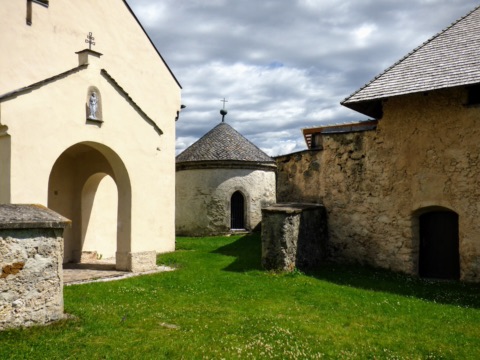
Kärntner Kreuzweg and Totentanz in Stein im Jauntal5.6 km · 20 min by bike · 7 min by carOn a rock above the village of Stein im Jauntal stands the parish church of St. Laurentius, which grew out of the chapel of a medieval castle.
On a rock above the village of Stein im Jauntal stands the parish church of St. Laurentius, which grew out of the chapel of a medieval castle. The path up is laid out as the “Kärntner Kreuzweg” (way of the cross): in the early 1980s, 14 Carinthian artists created the stations anew – Station X, for example, is a ceramic work by Kiki Kogelnik. Next to the church stands the Romanesque round charnel house, whose interior Kogelnik decorated in 1996 with a modern Totentanz (dance of death) made of animal and human skeletons.
A little under an hour is enough for the walk with church and charnel house; sturdy shoes help on the steep path. At the top you are rewarded with a wide view over the Jauntal. On the first Sunday in February the Striezelwerfen (bread-throwing) takes place from the balcony of the sexton’s house, a custom recognised as intangible cultural heritage.
All year
At a glance
Kreuzweg (way of the cross) with 14 stations by contemporary Carinthian artists
Totentanz (dance of death) by Kiki Kogelnik in the charnel house (1996)
Church with Romanesque crypt and frescoes from the 13th/14th century
Freely accessible, no admission charge
Our tip
The visit combines well with a bike ride through the Jauntal.
The church and charnel house are not always open; your chances are best at the weekend.
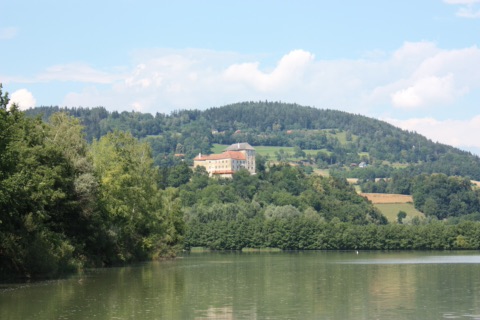
Schloss Neudenstein13 km · 44 min by bike · 16 min by carOn a wooded rocky outcrop above the north shore of the Völkermarkter Stausee stands Schloss Neudenstein, known as the “black castle” because of its dark walls, Črni Grad in Slovene.
On a wooded rocky outcrop above the north shore of the Völkermarkter Stausee stands Schloss Neudenstein, known as the “black castle” because of its dark walls, Črni Grad in Slovene. Konrad von Auffenstein had the castle built in 1329, and parts of the south and east walls still date from that time. In the 16th and late 17th centuries it was converted into a palace with an arcaded courtyard and chapel; at the beginning of the 20th century the landscape painter Gilbert von Canal lived here.
The castle has been privately owned since 1970 and cannot be visited. It is worth seeing as a landmark: from the water, from the opposite shore of the reservoir or on a bike ride along the Drava, you can see it towering above the trees. The detour combines well with a stroll through Völkermarkt’s old town or a boat trip on the reservoir.
All year (outside only)
At a glance
Built in 1329 by Konrad von Auffenstein
Rebuilt in the 16th and 17th centuries, arcaded courtyard
Privately owned since 1970 (Comelli-Stuckenfeld family)
Can only be seen from the outside
Our tip
The best view is from the water, for example from a pedalo or electric boat on the Völkermarkter Stausee.
Please respect the private property and stay on public paths.
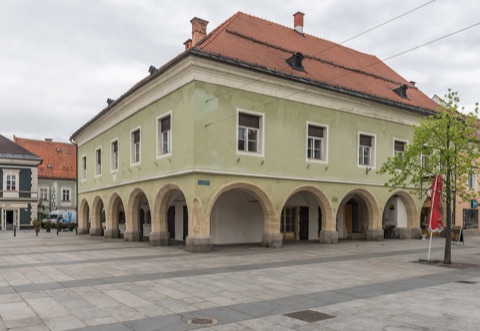
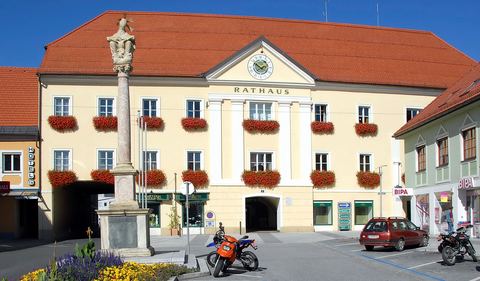
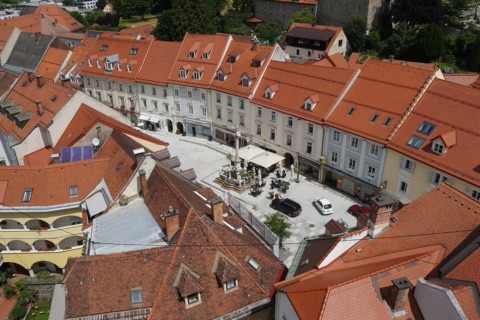
Völkermarkt15 km · 47 min by bike · 15 min by carOur nearest district town sits on a terrace high above the Völkermarkter Stausee on the Drava – even the drive across the Drava bridge is a lovely moment.
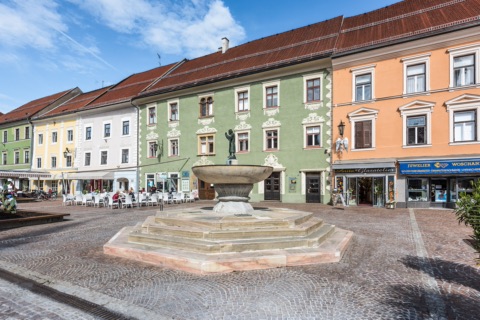
Our nearest district town sits on a terrace high above the Völkermarkter Stausee on the Drava – even the drive across the Drava bridge is a lovely moment. On the main square stand the Old Town Hall of 1499 with its late Gothic arcade and the Neue Burg; remains of the medieval town wall can be discovered on a stroll. The parish church of St. Magdalena is Romanesque at its core, was later remodelled in Gothic style and impresses with frescoes and a Baroque pulpit.
If you would like to learn more about the region, visit the Bezirksheimatmuseum (district museum), which focuses on folk traditions and the Carinthian plebiscite of 1920. Popular events are the weekly market with produce from the area, open-air concerts on the square in summer, the town festival at the end of May and the “Wine & more” wine festival in September.
All year; weekly market, festivals in summer
At a glance
Old Town Hall of 1499 with late Gothic arcade
Parish church of St. Magdalena (Romanesque/Gothic)
Bezirksheimatmuseum, the largest museum in southern Carinthia
Town festival at the end of May, “Wine & more” wine festival in September
Our tip
Visit the weekly market for regional produce.
Enjoy the view from the town terrace over the Völkermarkter Stausee.
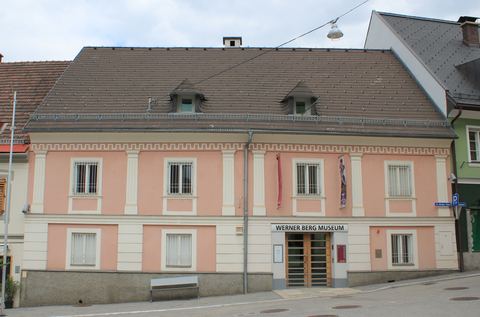
Bleiburg & Werner Berg Museum25 km · 25 min by carThe small bilingual town of Bleiburg/Pliberk below the Petzen is home to one of the finest art museums in Carinthia.Free with Kärnten Card
Photo: Neithan90, Public Domain, via Wikimedia Commons
The small bilingual town of Bleiburg/Pliberk below the Petzen is home to one of the finest art museums in Carinthia. The painter Werner Berg (1904–1981) came from Germany to the southern Carinthian border region in 1931, lived as a farmer and artist on the remote Rutarhof and captured the life of the people here – markets, churchgoing, farm work – in powerful, richly coloured paintings. Since 1968 the town has dedicated a museum to him on the main square.
Alongside the Werner Berg collection, the museum shows a major special exhibition every year, plus a sculpture garden. On Sundays at 11:00 there is a free guided tour with a valid ticket, and a painting workshop for children. At the beginning of September Bleiburg turns into a huge fair for the Wiesenmarkt. An outing that combines well with a trip up the Petzen.
Museum approx. May to early November, Tue–Sun
At a glance
Werner Berg (1904–1981), on the Rutarhof from 1931
Museum on the main square in Bleiburg since 1968
Special exhibition changing every year, sculpture garden
Free guided tour on Sundays at 11:00 with an admission ticket
Closed on Mondays (open on public holidays)
Our tip
Plan your visit for Sunday at 11:00 to catch the free guided tour.
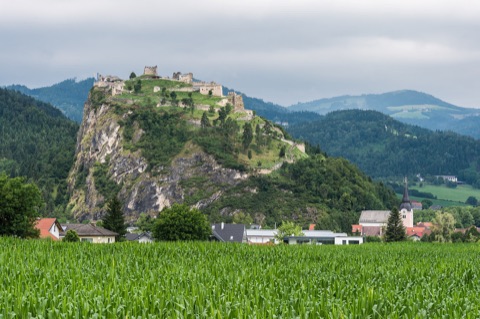
Griffner Schlossberg with castle ruin and dripstone cave25 km · 25 min by carAbove the market town of Griffen rises a steep limestone crag on which the Bishops of Bamberg built a castle in the 12th century.
Above the market town of Griffen rises a steep limestone crag on which the Bishops of Bamberg built a castle in the 12th century. Its walls, towers and castle chapel survive today as an extensive ruin that is freely accessible. The Schlossbergstraße leads up through the nature reserve in about 20 to 30 minutes; it climbs so evenly that you can manage it well even with a pushchair. From the top you look across the Jauntal to the Petzen and the Saualpe – since 2024 also from a glass viewing platform right above the rock face.
At the foot of the crag is the entrance to the Griffener Tropfsteinhöhle, which surprises visitors with colourful stalactites on a guided tour of about half an hour – a good destination on dull days too. Experienced climbers with their own equipment can scale the Schlossberg on a very difficult, partly overhanging via ferrata. Allow two to three hours for the ruin and the cave together.
Ruin freely accessible all year; dripstone cave May–September
At a glance
Castle of the Bishops of Bamberg, 12th century, now a ruin
On the guided old-town walk you get to know Klagenfurt on foot in about an hour and a half. The meeting point is the Spanheimerbrunnen fountain on Dr.-Arthur-Lemisch-Platz next to the Landhaus. From there you walk through the Renaissance old town with its arcaded courtyards, across the Alter Platz and the Neuer Platz to the Lindwurmbrunnen (dragon fountain). Along the way the guide tells you about the town’s history and its legends, such as the tower watchman of the parish church of St. Egid, who, legend has it, woke the dead in the neighbouring cemetery.
The tour runs all year on Fridays and Saturdays at 10:00, and additionally on Wednesdays in July and August. Places are limited, so book in advance online with Visit Klagenfurt. Comfortable shoes are all you need. If you’d rather explore on your own, pick up the free “Altstadtwandern” brochure at the tourist information in the town hall on the Neuer Platz and follow the green markings on the ground.
All year Fri/Sat 10:00, July/Aug also Wed · Fri and Sat 10:00, in July and August also Wed 10:00
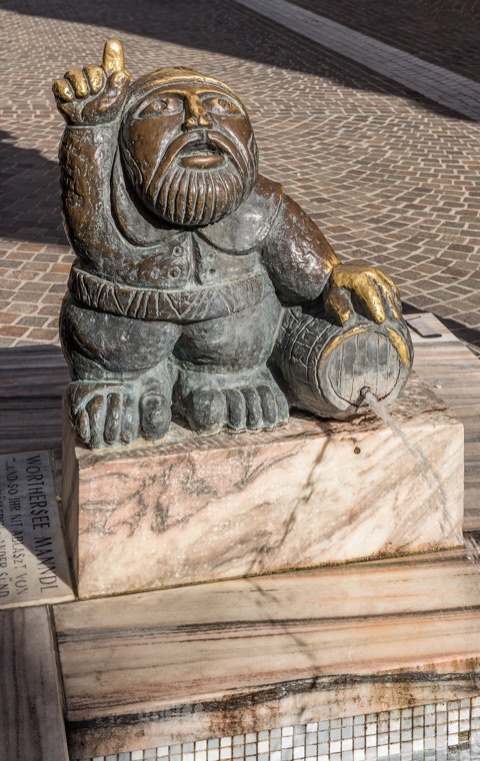
Wörtherseemandl fountain in Klagenfurt28 km · 35 min by carAt the end of the Kramergasse, on the small Dr.-Arthur-Lemisch-Platz in Klagenfurt’s city centre, stands a bearded little bronze man with a small barrel in his arms: the Wörtherseemandl.
At the end of the Kramergasse, on the small Dr.-Arthur-Lemisch-Platz in Klagenfurt’s city centre, stands a bearded little bronze man with a small barrel in his arms: the Wörtherseemandl. The legend tells of a rich town whose people preferred to party on Christmas Eve rather than go to Midnight Mass. A little man warned them twice, then he opened his barrel – the water flooded the town, and that is how the Wörthersee came to be.
The figure was created by the sculptor Heinz Goll in 1962; in Carinthia the Mandl is almost as famous as the Lindwurm (dragon) on the Neuer Platz. A visit takes only a few minutes and goes well with a stroll through the old town – from the Alter Platz it is just a few steps through the pedestrian zone. Children love it if you tell them the legend first and then let them discover the barrel themselves.
All year
At a glance
Bronze figure by Heinz Goll, 1962
Location: end of the Kramergasse, Dr.-Arthur-Lemisch-Platz
Freely accessible, all year
Klagenfurt’s second legendary landmark after the Lindwurm
Our tip
Combine the Mandl with a circular walk: Alter Platz – Kramergasse – Neuer Platz with the Lindwurm fountain.
Tell children the legend of the sunken lakeside town beforehand, and the short stop becomes an adventure.
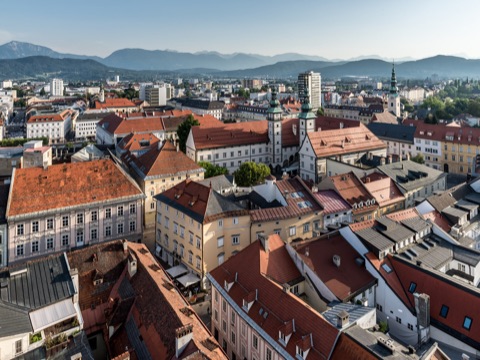
Klagenfurt am Wörthersee31 km · 35 min by carCarinthia’s provincial capital is a good half hour away and combines an Italianate old town with lakeside bathing on the Wörthersee.
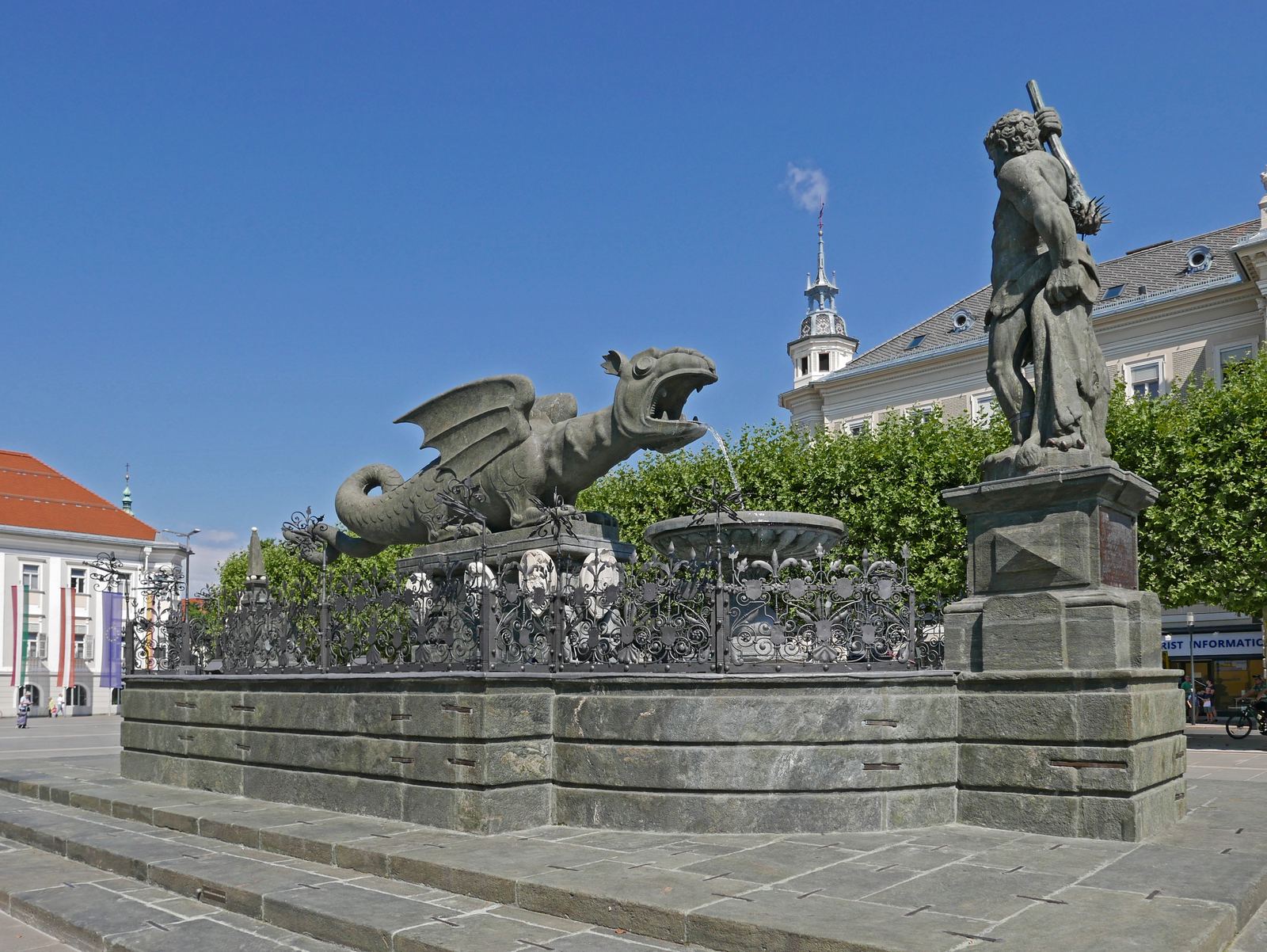
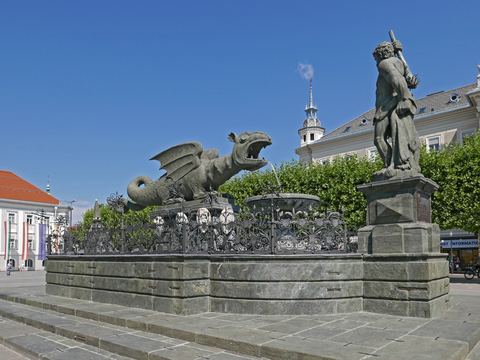
Carinthia’s provincial capital is a good half hour away and combines an Italianate old town with lakeside bathing on the Wörthersee. On the Neuer Platz the Lindwurm, Klagenfurt’s heraldic animal, keeps watch: the dragon was carved around 1590 from a single block of chlorite schist; a “dragon’s skull” found in 1335, by the way, later turned out to be the skull of an Ice Age woolly rhinoceros. Around the Alter Platz you will find arcaded courtyards, cafés and shops; the Kramergasse is considered the oldest pedestrian zone in Austria. On Saturday mornings the Benediktinermarkt with regional specialities is well worth a visit.
Along the Lendkanal, about 4 kilometres long, you can walk or cycle past villas to the Wörthersee, where the Strandbad Klagenfurt, with three bathing jetties and a large sunbathing lawn, is one of the largest lidos in Austria. Minimundus and the Reptilienzoo Happ are right on the way. Tip: with the Aktiv Card you can take the train into town in comfort and save yourself the hunt for a parking space.
All year
At a glance
Lindwurm fountain on the Neuer Platz, around 1590
Kramergasse – the oldest pedestrian zone in Austria
Lendkanal approx. 4 km between the old town and the Wörthersee
Strandbad Klagenfurt with three bathing jetties and boat hire
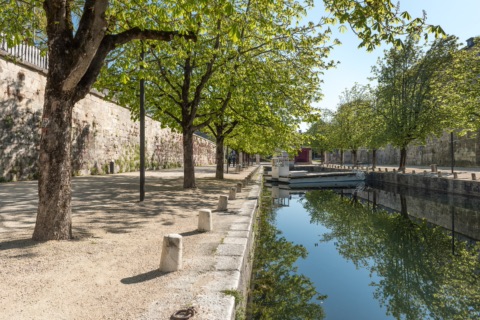
Klagenfurt – Lendhafen and Lendkanal31 km · 35 min by carThe Lendkanal was dug from 1527 onwards. In the past, building materials and firewood were brought along it from the Wörthersee into the town.
The Lendkanal was dug from 1527 onwards. In the past, building materials and firewood were brought along it from the Wörthersee into the town. Today the canal, about four kilometres long, ends at the Lendhafen by the Elisabethbrücke, on the western edge of Klagenfurt’s city centre. Here, under chestnut trees, there is a café with a courtyard. In summer the cultural association Lendhauer holds readings, film evenings and art projects at the harbour, such as public screenings of the Bachmann Prize readings.
On both sides of the canal, paths for walkers and cyclists lead through greenery to Maria Loretto and the eastern shore of the Wörthersee with the Europapark and lido. On foot it takes about an hour each way, by bike around 15 minutes. This outing combines well with a stroll through the old town, which is a few minutes’ walk from the Lendhafen. Boats no longer run on the canal for nature-conservation reasons.
All year, cultural programme June–September
At a glance
Canal about 4 km long, built from 1527
Paths on both banks to the Wörthersee
Cultural programme by the Lendhauer association, mainly June to September
Lendhafencafé, Villacher Straße 18 (usually Tue–Sat)
Our tip
Cycle along the canal to the Wörthersee and have a swim at the Strandbad Klagenfurt.
You’ll find the programme of summer evenings at the harbour on lendhafen.at.
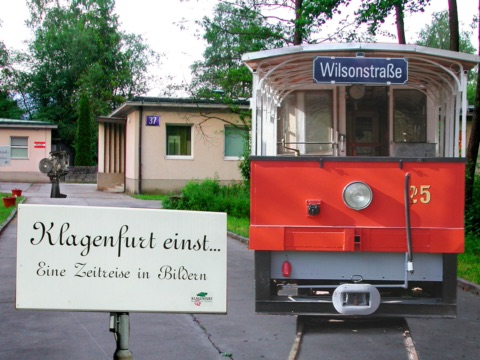
Lendcanaltramway, Stadtverkehrs- und Kinomuseum Klagenfurt40 km · 37 min by carSouth of Klagenfurt’s Strandbad lido, a little museum tram has been running along the Lendkanal since 1976.Free with Kärnten Card
South of Klagenfurt’s Strandbad lido, a little museum tram has been running along the Lendkanal since 1976. When Klagenfurt closed its tram network in 1963, tram enthusiasts saved several cars from the scrapyard, and this line was built for them. At first a horse pulled the cars; today a battery railcar in historic style does the job. The metre-gauge line, about 800 metres long, runs through a protected landscape area, partly through a tunnel of trees, to the Im Moos terminus. In 2026 the Lendcanaltramway celebrated its 50th birthday.
Right next to the Lendcanal stop is the Stadtverkehrs- und Kinomuseum (urban transport and cinema museum). It tells the story of public transport in Klagenfurt and the cinema history of the region. The museum also has a small cinema with film screenings. For children there is a play and reading corner, a quiz trail and a model tram. Allow about an hour to an hour and a half for the ride and the museum. The tram only runs in fine weather; the museum is open in the rain, too.
Late June to early October, Sat and Sun 10:00–17:00 (2026 season); dates for 2027 not yet published
At a glance
2026 season: 27 June–4 October, Sat and Sun 10:00–17:00, departures on the hour and half hour (fine weather only)
Line approx. 0.8 km, metre gauge, in service since 1976
Tram and museum together: adults €12, children aged 6–13 €6, family €30 (as of 2026)
Museum at Wilsonstraße 37; bus 10 (in summer), 20 or C to the Klagenfurt Strandbad stop
No dogs; the historic cars are not wheelchair accessible
Our tip
There is no parking at the museum itself. Park (for a fee) at the Strandbad and combine the ride with a day at the beach on the Wörthersee.
With the Kärnten Card the ride and museum admission are free.
Kärnten Card: A free tram ride and free admission to the Stadtverkehrs- und Kinomuseum, once a day
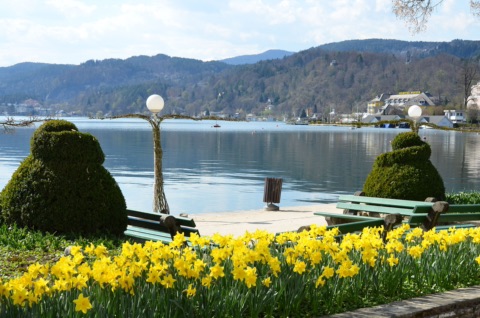
Pörtschach am Wörthersee – flower promenade45 km · 41 min by carPörtschach on the north shore of the Wörthersee is one of Carinthia’s classic summer resorts: Johannes Brahms composed here.
Pörtschach on the north shore of the Wörthersee is one of Carinthia’s classic summer resorts: Johannes Brahms composed here. The lake promenade, around two kilometres long – the Blumenpromenade and the Johannes-Brahms-Promenade – leads past flower beds, park benches and villas out onto the wooded peninsula with the unspoilt Landspitz point, from which you look across the eastern and western bays.
A leisurely walk around the peninsula takes one to one and a half hours; the path is flat and easy with a pushchair too. Along the way is the Promenadenbad lido with a water slide, diving tower and an arched bridge just over 100 metres long to the Blumeninsel (flower island). If you still fancy a view, it is a short climb up to the Hohe Gloriette, looking out from Maria Wörth to Velden and the Karawanks.
May–September (promenade accessible all year)
At a glance
Lake promenade around 2 km, flat
Peninsula in a protected landscape area
Promenadenbad lido with bridge to the Blumeninsel
Promenade freely accessible
Our tip
Bring your swimming things – a detour to the Promenadenbad combines nicely with the walk.
The flower promenade is at its most colourful in spring and early summer.
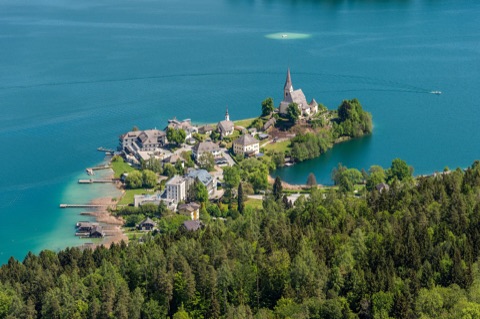
Maria Wörth – church peninsula on the Wörthersee49 km · 51 min by carOn a small peninsula on the southern shore of the Wörthersee, two churches stand close together: the Gothic parish and pilgrimage church of Saints Primus and Felician – the same patron saints as in our St. Primus – and the smaller Romanesque Rosenkranzkirche …
On a small peninsula on the southern shore of the Wörthersee, two churches stand close together: the Gothic parish and pilgrimage church of Saints Primus and Felician – the same patron saints as in our St. Primus – and the smaller Romanesque Rosenkranzkirche or Winterkirche (rosary or winter church). “Maria Werd” was mentioned as early as the 9th century. Climb the steps up to the parish church, take a look into the charnel house in the churchyard and enjoy the view over the lake from above.
A walk around the peninsula takes just under an hour, and afterwards the cafés on the shore invite you to take a break. It is especially lovely to arrive by boat with the Wörthersee-Schifffahrt, which calls at Maria Wörth – for example as part of a lake cruise from Klagenfurt or Velden. You get the classic photo view of the peninsula from the Pyramidenkogel or from Pörtschach on the opposite shore.
All year
At a glance
Parish church of Saints Primus and Felician and Romanesque Rosenkranzkirche (rosary church)
First documented in the 9th century as “Maria Werd”
Landing stage of the Wörthersee-Schifffahrt
Churches open all year, free admission
Our tip
Combine your visit with the Pyramidenkogel, from where you can see the peninsula from above.
In summer, parking in the village is scarce – arriving by boat is more relaxed.
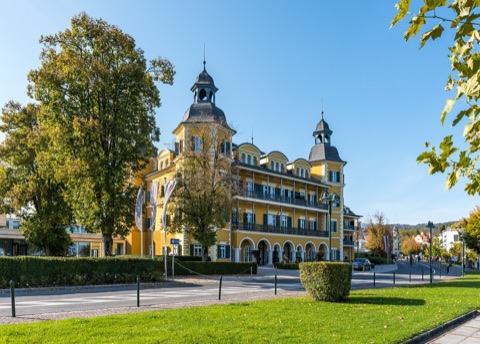
Velden am Wörthersee – promenade and castle53 km · 46 min by carVelden lies on the western bay of the Wörthersee and has been one of Austria’s best-known lake resorts since the late 19th century.
Velden lies on the western bay of the Wörthersee and has been one of Austria’s best-known lake resorts since the late 19th century. Its centrepiece is the Seecorso, a lakeside promenade with lanterns, benches and a view across the lake to Pörtschach, lined with cafés, ice-cream parlours, boutiques and the casino. At the western end stands Schloss Velden: completed in 1603 for Bartholomäus Khevenhüller, converted into a hotel around 1890 and familiar to many from the TV series “Ein Schloss am Wörthersee”. Today it is a hotel; you can admire it from outside and from the shore at any time.
Two to three hours are enough for a stroll along the promenade, through the spa park and the town centre. Velden is at its most atmospheric on a summer evening, when the promenade is busy and the sun sets over the lake. The visit combines well with a boat trip to Maria Wörth or Pörtschach or a section of the Wörthersee circular trail.
All year, at its best May–September
At a glance
Schloss Velden: completed 1603, a hotel since 1890
Lakeside promenade (Seecorso) with casino, cafés and boutiques
Market town with around 9,200 inhabitants
Boat landing stage for scheduled services and round trips on the Seecorso
Our tip
Parking in the centre is scarce on summer evenings, so allow some time to find a space.
During Advent a large illuminated Advent wreath floats in the bay – a reason to drop by outside the season too.
Archäologischer Park Magdalensberg32 km · 37 min by carAround 2,000 years ago a large Celtic-Roman trading town stood on the southern slope of the Magdalensberg.Free with Kärnten Card
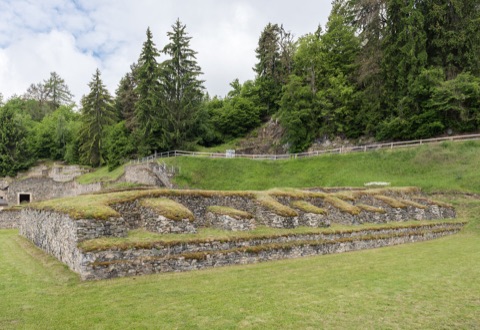
Around 2,000 years ago a large Celtic-Roman trading town stood on the southern slope of the Magdalensberg. Noric iron, bronze and gold were traded here, and at its peak probably 3,000 to 5,000 people lived on the mountain. Shortly before the middle of the 1st century AD the town was quickly abandoned, and its role was taken over by Virunum down in the Zollfeld. Excavations have taken place here every year since 1948. Today the archaeological park is a branch of the Landesmuseum Kärnten (Carinthia’s state museum).
On around four hectares you walk among excavated walls: you see the forum with the basilica and the tribunal, the temple that was never finished, the governor’s official building, workshops and houses with bathing rooms. Inscriptions and finds are displayed in the covered rooms, including a cast of the famous “Youth of Magdalensberg”. The town became known when this bronze statue was found in 1502. Most of the tour is outdoors and on the slope. The road continues up to the summit with its church and a wide view over the Klagenfurt basin.
May to October (May–September Tue–Sat, October Fri/Sat)
St. Veit an der Glan – old ducal town38 km · 44 min by carUntil 1518 St. Veit was the capital of Carinthia, and the old town still shows it: the long main square is lined with colourful town houses, the late-Gothic town hall with its arcaded courtyard, the plague column and two fountains – the Schüsselbrunnen and …
Until 1518 St. Veit was the capital of Carinthia, and the old town still shows it: the long main square is lined with colourful town houses, the late-Gothic town hall with its arcaded courtyard, the plague column and two fountains – the Schüsselbrunnen and the Walther-von-der-Vogelweide fountain. Large parts of the medieval town wall have survived.
One to two hours are enough for a relaxed stroll with a coffee break. A few steps from the main square stands the Fuchspalast, a deliberately flamboyant hotel designed by the painter Ernst Fuchs, which you can admire from outside. The Museum St. Veit on the main square covers transport and town history, with model railways. St. Veit combines well with Burg Hochosterwitz.
All year
At a glance
Capital of Carinthia until 1518
Main square with town hall, plague column (1715/16) and Schüsselbrunnen
Fuchspalast: Prof.-Ernst-Fuchs-Platz 1
Museum St. Veit: closed from November to March
Our tip
Combine your visit with Burg Hochosterwitz, just a few kilometres away.
The main square is a pedestrian zone – park on the edge of the old town.
Stift St. Paul im Lavanttal39 km · 40 min by carOn a hill above the Lavanttal stands the Benedictine abbey of St. Paul, founded in 1091 by Engelbert von Spanheim and still home to monks today.Free with Kärnten Card
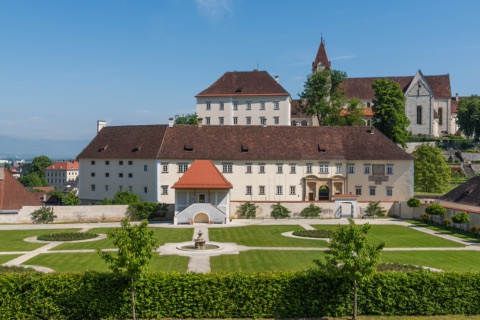
On a hill above the Lavanttal stands the Benedictine abbey of St. Paul, founded in 1091 by Engelbert von Spanheim and still home to monks today. It is called the “treasure house of Carinthia”: the museum shows paintings (including an oil sketch by Rubens), the Romanesque Adelheid Cross, goldsmiths’ work and parts of the library with more than 180,000 volumes and around 4,000 manuscripts. A special exhibition is added every year.
The Romanesque abbey basilica with its twin-towered façade is open to all; behind the high altar lie 14 early Habsburgs. To finish, the Baroque and herb garden with the little Belvedere garden pavilion and its view over the valley is well worth it. Allow two to three hours for the museum, church and garden – a good choice for a rainy day, and easy to combine with a cider tavern (Mostheuriger) in the Lavanttal.
Museum May–October, Wed–Sun 10:00–17:00; basilica all year
At a glance
Founded in 1091, Benedictine monastery
Museum season 1 May–31 October, Wed–Sun 10:00–17:00 (as of 2026)
Library with more than 180,000 volumes
Burial place of 14 early Habsburgs
Our tip
Book guided tours of the museum and library in advance (tel. +43 4357 2019-20).
The museum is closed on Mondays and Tuesdays.
Kärnten Card: Free admission once a day (normal price €15)
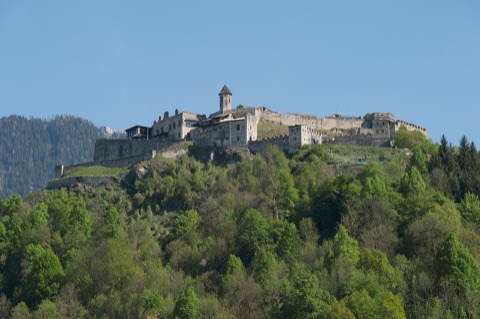
Burg Hochosterwitz40 km · 41 min by carLike something out of a storybook, Burg Hochosterwitz sits enthroned on a steep limestone rock in central Carinthia – one of the most impressive castles in Austria and owned by the Khevenhüller family since the 16th century.Free with Kärnten Card
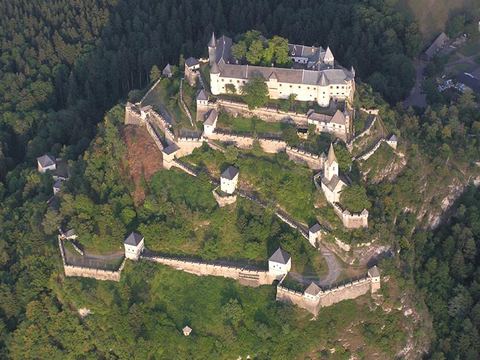
Like something out of a storybook, Burg Hochosterwitz sits enthroned on a steep limestone rock in central Carinthia – one of the most impressive castles in Austria and owned by the Khevenhüller family since the 16th century. What makes it special is the way up: it leads through 14 castle gates, each with its own defensive feature such as drawbridges, portcullises and arrow slits. If you prefer an easier way up, take the Fürst-Max-Bahn, an inclined lift that is also suitable for pushchairs.
At the top you will find an armoury with a weapons collection, a Renaissance picture gallery, the castle church and a wide view across the countryside. The castle restaurant serves Carinthian cuisine; in summer there are concerts, exhibitions and festivals. Allow two to three hours for the climb and the visit.
April to early November
At a glance
14 castle gates along the way up
Fürst-Max-Bahn (inclined lift) as an alternative to the footpath
Guided town walk in Wolfsberg (Aktiv Card)45 km · 37 min by carOn this guided walk you get to know the loveliest spots of Wolfsberg’s old town and fascinating chapters of its history.Free with Aktiv Card
On this guided walk you get to know the loveliest spots of Wolfsberg’s old town and fascinating chapters of its history. The old town lies between Schloss Wolfsberg and the river Lavant; on the Schlossberg and at the Rossmarkt parts of the medieval town wall still survive. The tour lasts an hour and a half, is suitable for children and needs no booking. If the weather looks uncertain, bring an umbrella.
July to mid-September, Thursdays 10:00–11:30
At a glance
Meeting point: Museum im Lavanthaus, St. Michaeler Straße 2
Free with the Aktiv Card, no advance booking
Our tip
Combine the tour with an afternoon at the Stadionbad Wolfsberg.
Wolfsberg in the Lavanttal46 km · 39 min by carWith around 25,000 inhabitants, Wolfsberg is the district town of the Lavanttal and lies on the river Lavant between the Saualpe and the Koralpe.
With around 25,000 inhabitants, Wolfsberg is the district town of the Lavanttal and lies on the river Lavant between the Saualpe and the Koralpe. Schloss Wolfsberg towers above the old town: the castle was first mentioned in 1178 and from 1846 was rebuilt by Count Hugo Henckel von Donnersmarck in neo-Gothic Tudor style – with its battlements it can be seen from far away. Down below, the Hoher Platz with its townhouses and the parish church of St. Markus invite you on a leisurely walk.
For a stroll through town with a coffee break, allow two to three hours. Wolfsberg makes a good stop on a day in the Lavanttal, which is known for cider and orchards, or a starting point for hikes on the Saualpe and Koralpe. Sturdy footwear helps on the short climb to the castle park.
All year
At a glance
District town of the Lavanttal, approx. 25,000 inhabitants
Schloss Wolfsberg: first mentioned 1178, neo-Gothic rebuilding from 1846
Parish church of St. Markus and Hoher Platz in the old town
Starting point for the Saualpe and Koralpe
Our tip
Round off your stroll with a Mostjause – cider and a cold platter – at a Buschenschank (farm tavern) in the Lavanttal.
Park on the edge of the old town and explore the centre on foot.
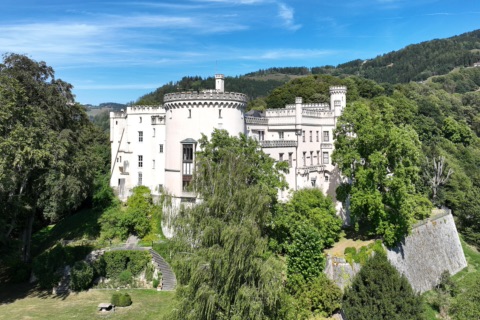
Schloss Wolfsberg48 km · 41 min by carHigh above Wolfsberg’s old town towers the white castle with its battlements and round towers – the landmark of the Lavanttal.
High above Wolfsberg’s old town towers the white castle with its battlements and round towers – the landmark of the Lavanttal. From the Middle Ages the castle belonged to the Bishops of Bamberg; in 1846 the industrialist Hugo Henckel von Donnersmarck bought it and had it rebuilt in the English Tudor style in 1847–1853. Since 1937 the castle has belonged to the Kärntner Montanindustrie, and its halls are used for concerts, balls and weddings.
Open to visitors are the listed castle park from the 1850s and the Stölzl family’s castle restaurant with café, bar, wine shop and terrace above the Lavanttal. There are no regular guided tours of the interior. Allow half a day and combine the visit with a walk through Wolfsberg’s old town on the Lavant.
All year (park and restaurant; restaurant Wed–Sun)
At a glance
Rebuilt in Tudor style 1847–1853
Castle park is a listed monument
Schlossrestaurant Stölzl, closed Mon and Tue
Interior only during events
Our tip
It’s best to book the castle restaurant in advance; kitchen hours are shorter than opening hours.
It’s worth checking the events calendar: at the “Konzerte à la Carte” you also get to see the state rooms.
Burg Landskron with Adler Arena69 km · 1 h by carOn a rocky knoll above the eastern shore of the Ossiacher See, in the Villach district of Landskron, stands the ruin of Burg Landskron.Free with Kärnten Card
On a rocky knoll above the eastern shore of the Ossiacher See, in the Villach district of Landskron, stands the ruin of Burg Landskron. First mentioned in the 14th century and later lavishly extended by the Khevenhüller family, the castle fell into decay after a fire in the 19th century; today you walk through gate towers and remains of walls to the castle restaurant with views over the lake, the Gerlitzen and Villach. The main attraction for families is the Adler Arena: in a flight show of about 40 minutes, eagles, vultures, falcons and owls glide just above the spectators’ heads.
At the foot of the castle hill is the Affenberg, where on a guided tour you can see Japanese macaques in their open enclosure – together they make a well-filled day out. There is a car park right by the castle. Allow about two hours for the flight show and a look round the castle, and arrive about half an hour before the start to get a good seat in the arena. A hat helps on the open stands when it’s sunny.
5 April–31 October (Adler Arena)
At a glance
Castle ruin above the Ossiacher See, Schlossbergweg 30, Villach-Landskron
Adler Arena daily from early April to the end of October
Flight show approx. 40 min, July/August daily at 11:00, 13:00, 15:00 and 17:00 (as of 2026)
Parking at the castle: car €5.90 (as of 2026)
Affenberg (Japanese macaques) at the foot of the castle hill
Our tip
Combine your visit with the Affenberg, just a few minutes away at the foot of the castle.
Outside July and August there are only shows at 11:00, 13:00 and 15:00 on weekdays – plan your journey accordingly.
Kärnten Card: Free admission once a day to the Adler Arena (bird of prey flight show); the Affenberg at the foot of the castle is free too
Villach is Carinthia’s second-largest town and has a compact, almost car-free old town. Its heart is the long Hauptplatz with colourful townhouses, cafés and shops, which climbs from the Drava bridge up to the parish church of St. Jakob. In the warmer months you can climb the church tower – at around 94 metres the tallest in Carinthia – and enjoy a wide view over the town as far as the Dobratsch. In side streets such as the Lederergasse you will find small shops and garden restaurants.
Down by the Drava, the riverside promenade is lovely for a stroll, and in summer excursion boats also leave from here. For a leisurely wander with a coffee or ice-cream break, allow two to three hours; if it rains, museums and shops offer plenty of alternatives. For a week around the first Saturday in August, the Villacher Kirchtag turns the whole old town into one big festival zone.
All year
At a glance
Carinthia’s second-largest town
Pedestrian zone from the Hauptplatz to the parish church of St. Jakob
St. Jakob church tower approx. 94 m, open to climb in summer
Drava promenade with boat landing stage
Our tip
It is best to park in one of the underground car parks on the edge of the old town and explore the centre on foot.
A visit combines well with the Villacher Alpenstraße up the Dobratsch.
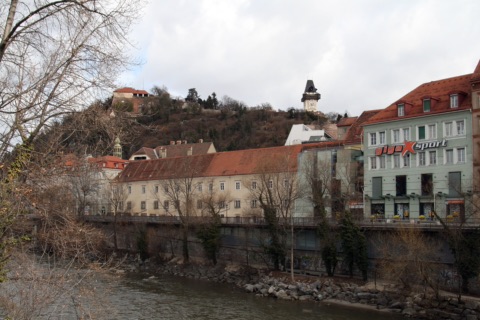
Schloßberg in Graz with the clock tower122 km · 1 h 40 min by carThe Schloßberg rises right in the middle of Graz’s old town; on top stands the 29-metre clock tower (Uhrturm), the city’s landmark.
The Schloßberg rises right in the middle of Graz’s old town; on top stands the 29-metre clock tower (Uhrturm), the city’s landmark. There are three ways up: by the Schloßbergbahn funicular from Kaiser-Franz-Josef-Kai in just under two minutes, by the lift from Schloßbergplatz in about 30 seconds, or on foot via the Felsensteig with its 260 steps. Access to the hill itself is free.
Take a look at the clock: the big hand shows the hours, the small one the minutes – originally there was only an hour hand. On top you’ll find gardens, the casemates used as an open-air stage, the bell tower and several viewpoints over the rooftops of the old town. Allow at least two hours; the easy way is to ride up by funicular or lift and walk back down the steps.
All year
At a glance
Clock tower 29 m tall, clock faces over 5 m in diameter
Clockwork from 1712
Felsensteig with 260 steps from Schloßbergplatz
Schloßberg freely accessible at any time
Our tip
For the best perspective, walk down via the Felsensteig – you come out right on Schloßbergplatz in the old town.
Combines well with a day trip to Graz on the Koralmbahn.
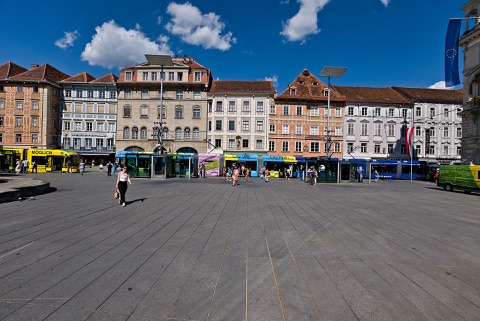
Graz – day trip on the Koralmbahn122 km · 1 h 40 min by carSince December 2025 the Koralmbahn has been running through the Koralm Tunnel, putting Graz just over half an hour from Kühnsdorf-Klopeiner See station.Discount with Aktiv Card
Since December 2025 the Koralmbahn has been running through the Koralm Tunnel, putting Graz just over half an hour from Kühnsdorf-Klopeiner See station. The old town of Styria’s capital, together with Schloss Eggenberg, is a UNESCO World Heritage Site. From the Hauptplatz with the town hall and the Erzherzog-Johann-Brunnen (fountain) you can walk to the Herrengasse, the Landhaus with its Renaissance arcaded courtyard, the cathedral and the Schloßberg with the clock tower (Uhrturm).
On the right bank of the Mur are the Kunsthaus, which the people of Graz call the “Friendly Alien”, and the Murinsel. For one day, concentrate on the old town and the Schloßberg; Schloss Eggenberg on the western edge of town can be reached by tram. The trip works well in rainy weather, as museums and cafés are close together. By car it takes about an hour and a half; the train is the more comfortable choice.
All year
At a glance
Train from Kühnsdorf-Klopeiner See approx. 36 min (ÖBB) or approx. 33 min (WESTBAHN), as of 2026
Old town and Schloss Eggenberg: UNESCO World Heritage
Koralmbahn in service since December 2025
Car approx. 1 h 30 min
Our tip
In summer the See-Shuttle (lines 763/764), timed to meet the trains, takes you to Kühnsdorf station.
From Graz main station, several tram lines get you to the Hauptplatz in a few minutes.